MEXOCELL
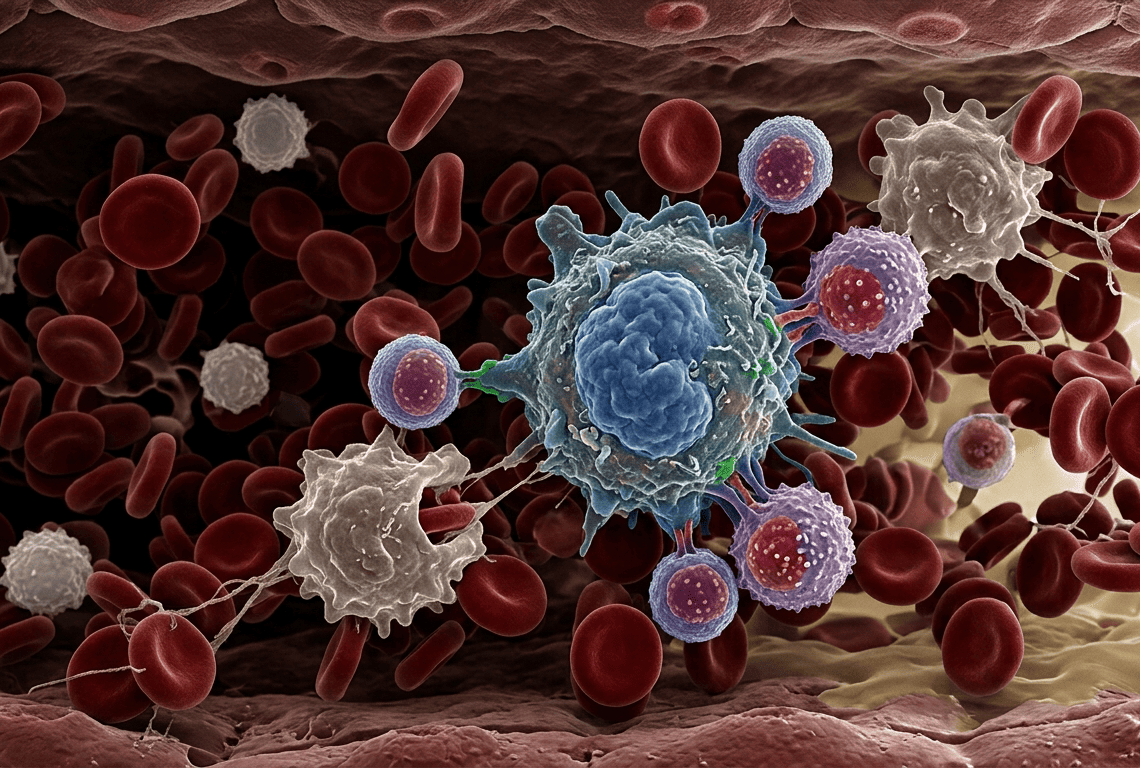
Illustration of a circulating tumor cell surrounded by immune cells in a blood vessel

Circulating Tumor Cells

Circulating Tumor Cells

Circulating Tumor Cells (CTCs) refer to cancer cells that have shed from a primary tumor and entered the bloodstream. As these cells circulate throughout the body, a small fraction may lodge in other organs, survive, and potentially form new metastatic lesions; hence, they are strongly linked to the occurrence of cancer metastasis. However, CTCs are exceptionally rare in the blood, often present as only a few cells among billions of blood cells. Consequently, the effective isolation, expansion, and identification of CTCs remain major technical challenges in cancer research and diagnostics. In recent years, CTCs have emerged as a critical target in liquid biopsy. Analyzing CTCs from a small blood sample offers a minimally invasive approach to help physicians understand tumor characteristics, monitor therapeutic response, and track disease progression. With ongoing advancements in liquid biopsy technology, CTC analysis has become a vital area of research in precision oncology, promising a pivotal role in early cancer detection, personalized treatment, and precision medicine to unlock new possibilities in cancer care.

Target Populations & Frequency for CTC Testing

Health Screening / High-Risk Groups: Follow up every 3 to 6 months as part of routine health checkups. Patients Undergoing Cancer Treatment: Perform dynamic evaluations before, during, and after treatment courses to assess drug efficacy. Survivorship & Recovery Phase: Follow up every 3 to 6 months for the first two years, then transition to once annually thereafter.

How does CTC testing differ from traditional imaging (CT) or endoscopy ?

Imaging and endoscopic examinations primarily detect formed, solid tumor lesions. In contrast, CTC testing detects trace amounts of circulating tumor cells floating in the bloodstream. In clinical practice, the two are complementary: CTC testing offers the advantage of ultra-early warning, but if abnormalities are detected, imaging is still required to locate the physical lesion.

How does CTC testing differ from conventional serum tumor markers (“cancer indicators”)?

The specificity and sensitivity of CTC testing are significantly superior to conventional tumor markers. Traditional tumor markers (such as CEA, CA-125, etc.) detect proteins secreted by cells, which are susceptible to false positives caused by inflammation, infection, or physiological fluctuations. CTC testing directly captures intact “circulating tumor cell entities” in the blood, providing a more direct and accurate reflection of the body's tumor burden.

What is the primary purpose of culturing cells ex vivo for 14 days?

The core objective is to dynamically screen for viable cancer cells possessing high invasiveness and metastatic potential. Through short-term ex vivo culturing for 14 days with sustained nutrient selection, only high-malignancy cells with continuous proliferative and adaptive capabilities survive. This helps the medical team precisely isolate cell populations associated with risks of metastasis and recurrence.
